
01 · First contact
I want to understand the shape
Begin with the strange idea of fractional dimension, then derive the cardioid and its first bulb.
No drawing instructions. No hidden dataset. Just one number, one equation, and a question that can take longer than the age of the universe to answer.
Choose a complex number . Start at zero. Then press the same mathematical button again and again:
Square, add, repeat. The resulting sequence is an orbit, and every orbit has a fate: it remains captive, or it escapes.
Now turn that test into an image. Put the complex plane over the screen so each pixel has coordinates . Start a fresh orbit at zero for that pixel. If its distance from zero grows beyond 2, colour it by the iteration when it escaped; if it stays bounded, colour it black. Repeat the same test across the screen. The joined black pixels are the Mandelbrot set.
If , this is the exact arithmetic performed for every pixel:
The experiment below is therefore a one-pixel debugger for the complete picture. The upper map is the result of repeating the test; the orbit diagram opens up the calculation behind the marked pixel.
One-pixel debugger
The Mandelbrot picture is a map of answers. Each screen position supplies one complex number c; this experiment exposes the calculation hidden behind that single pixel.
The ring marks the c currently being calculated below.
THE REVEAL
The preview uses an 80-iteration budget, so a black preview pixel means “not seen escaping yet.” The mathematical set uses an infinite budget. Increasing the budget makes the computed outline approach that exact definition and reveals progressively finer boundary detail.
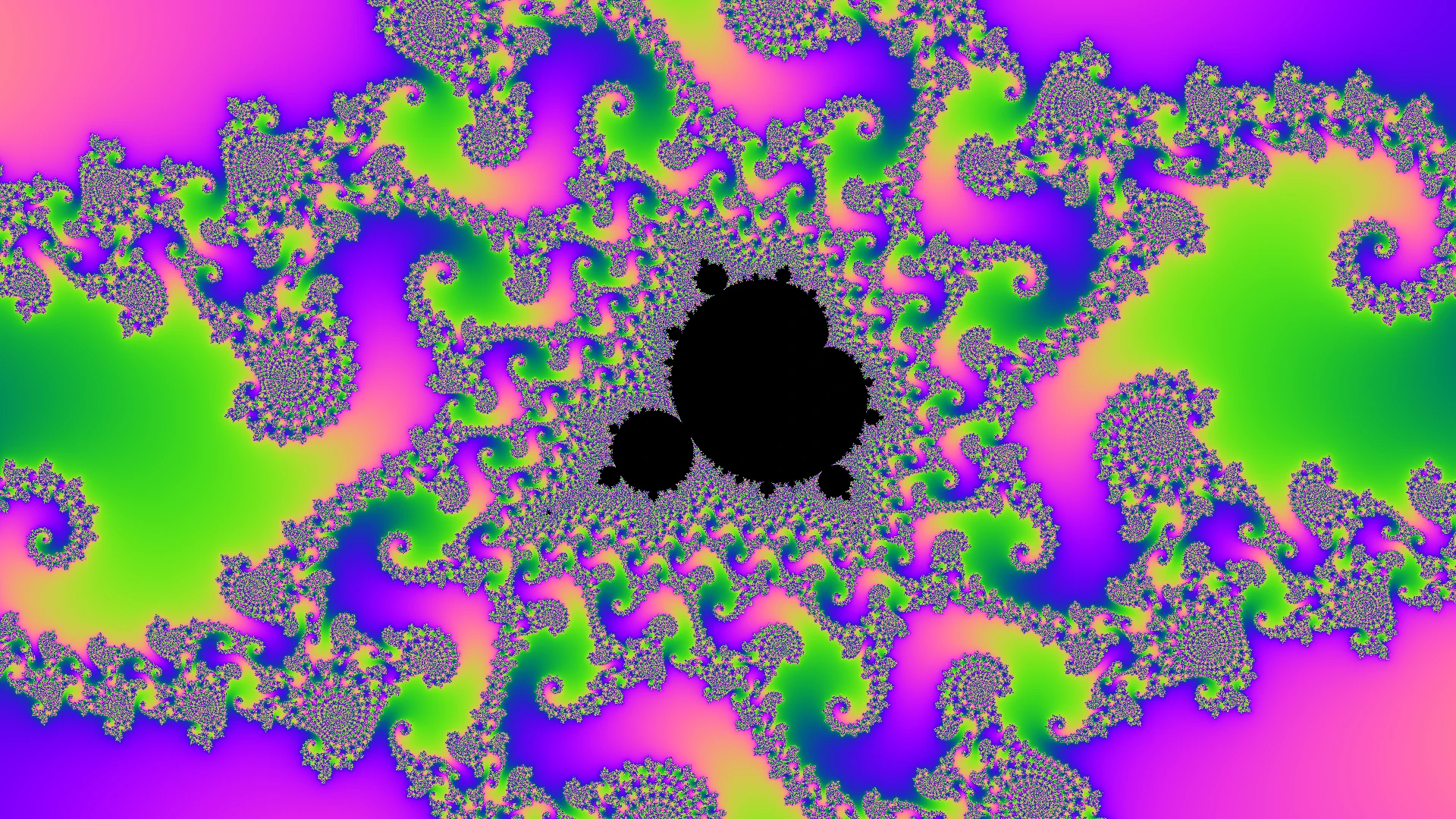
This is what the boundary looks like after you keep magnifying it:
Launch MandalaRead the field guide ↓
Nobody designed this shape. It was waiting inside the equation, complete with spirals, copies of itself, islands and filaments thinner than ordinary arithmetic can name. The field guide is not a list of features; it is a set of routes into that mystery.
You do not need to read this guide front to back. Start with the question that has hold of you.
01 · First contact
Begin with the strange idea of fractional dimension, then derive the cardioid and its first bulb.
02 · Behind the pixels
Follow one pixel from its orbit through escape measurement, colour, derivative, and light.
03 · Down the rabbit hole
See why pixels collapse near 10⁻¹³—and how one precise orbit carries a whole deep-zoom frame.
Its roughness reaches the maximum dimension available in a plane (a theorem of Shishikura); whether it also has positive area is still an open question.
Measure the roughness →Every location on the Mandelbrot map names an entire Julia set—connected inside the boundary, shattered outside it.
Cross between the planes →At impossible depths, perturbation computes one precise reference and describes every pixel as a tiny difference from it.
Go beyond 10−300 →These are not screenshots trapped in a page. Every card carries its real coordinates. Open one and the guide gives way to the live explorer at that exact location.
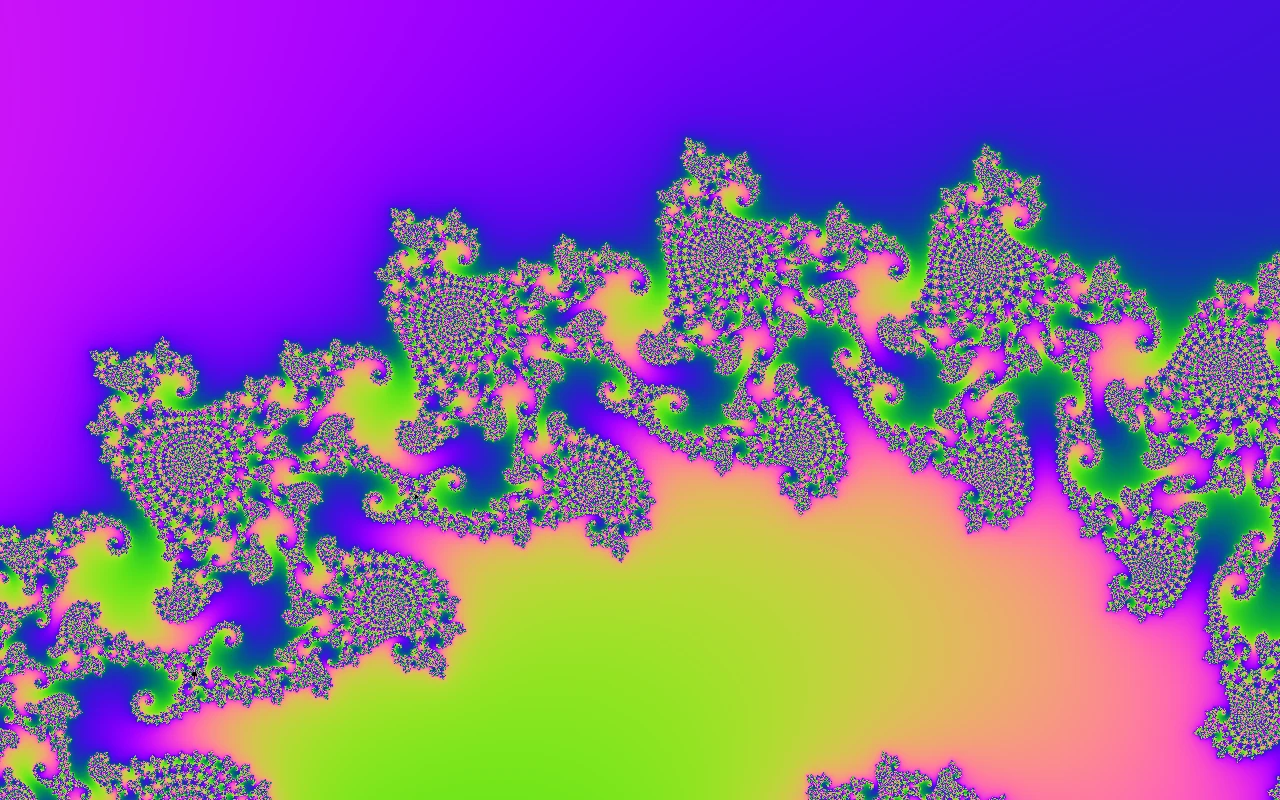 Seahorse Valley, deepThe classic dive between the cardioid and the period-2 bulb, where the seahorse tails curl.
c ≈ −0.743643887 + 0.1318259042i · span 1.5×10⁻³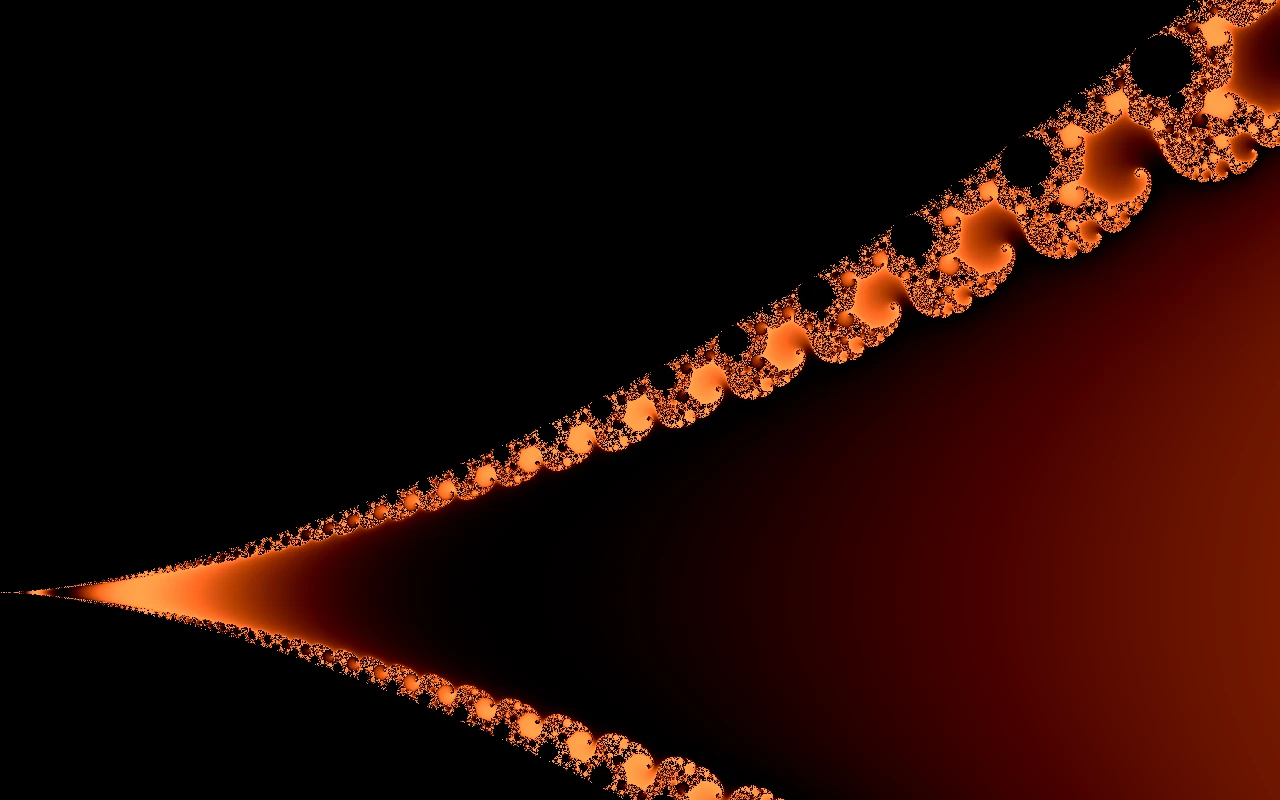 Elephant ValleyEast of the main cardioid, a parade of elephant-trunk spirals repeats at every scale.
c ≈ 0.275 + 0.0075i · span 0.05 Triple Spiral ValleyThree-armed spirals wind around each other in the northern antenna region.
c ≈ −0.0894 + 0.6543i · span 10⁻³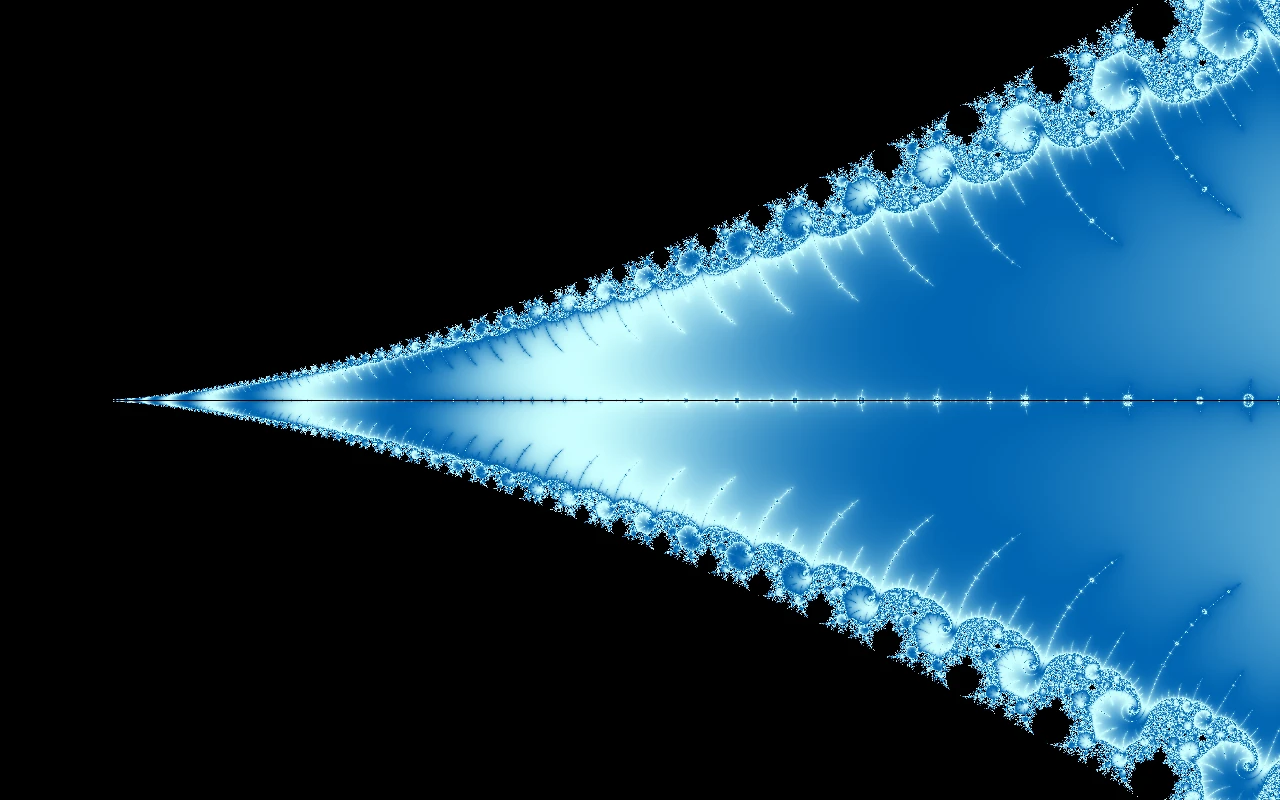 Mini-MandelbrotA complete copy of the whole set, seven ten-thousandths of a unit wide, on the western antenna.
c ≈ −1.7497 · span 7×10⁻⁴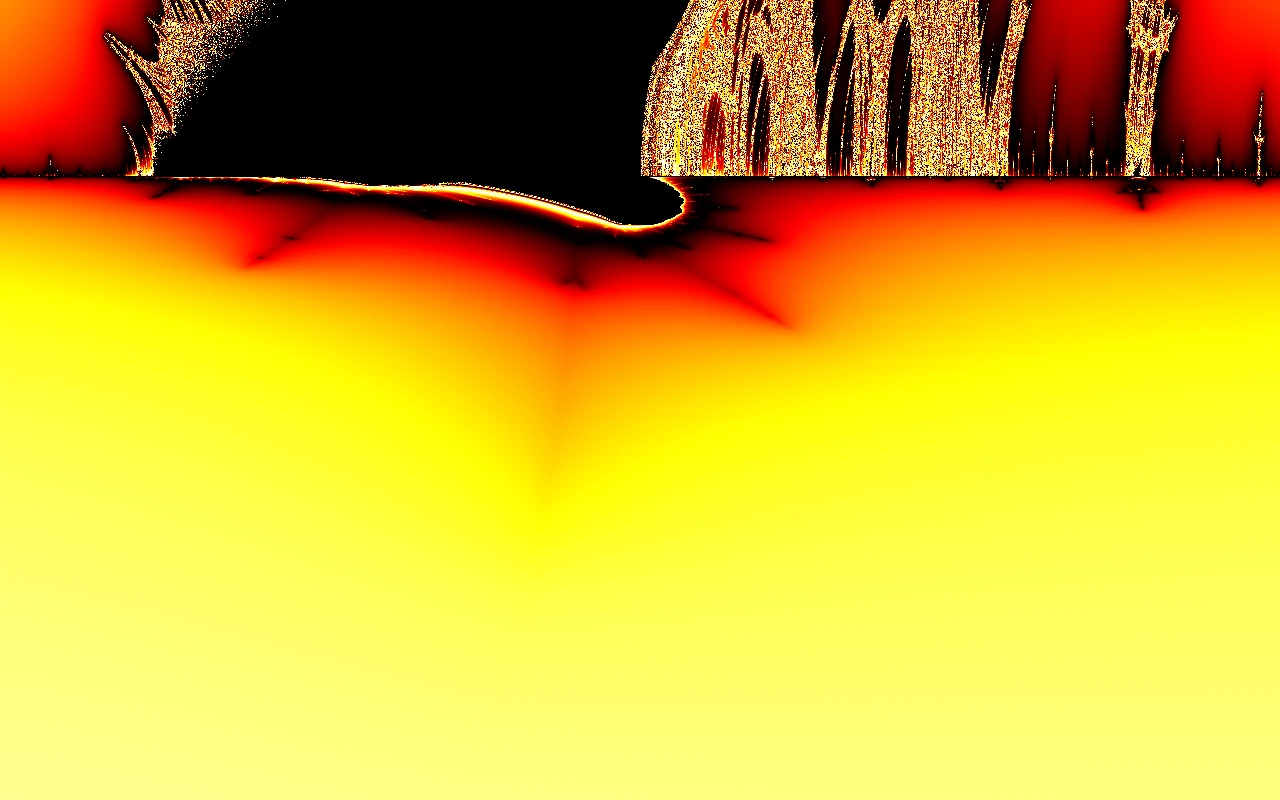 The Burning ShipThe hull and rigging of the Burning Ship — the |z| fold turns Mandelbrot curls into masts and flames.
c ≈ −1.75 + 0.0175i · span 0.1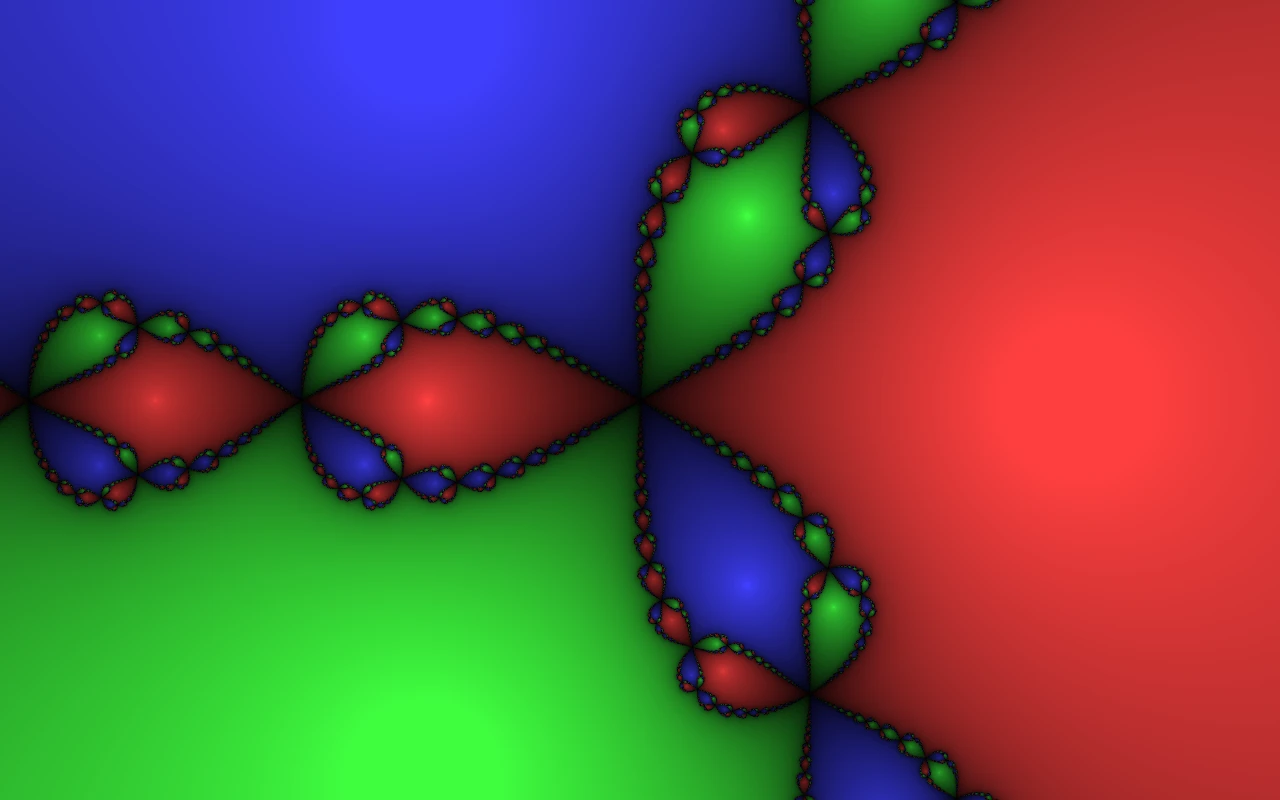 Newton basins of z³ − 1Newton’s method pulled toward three roots — the basins meet along an infinitely braided boundary.
z-plane · span 3.0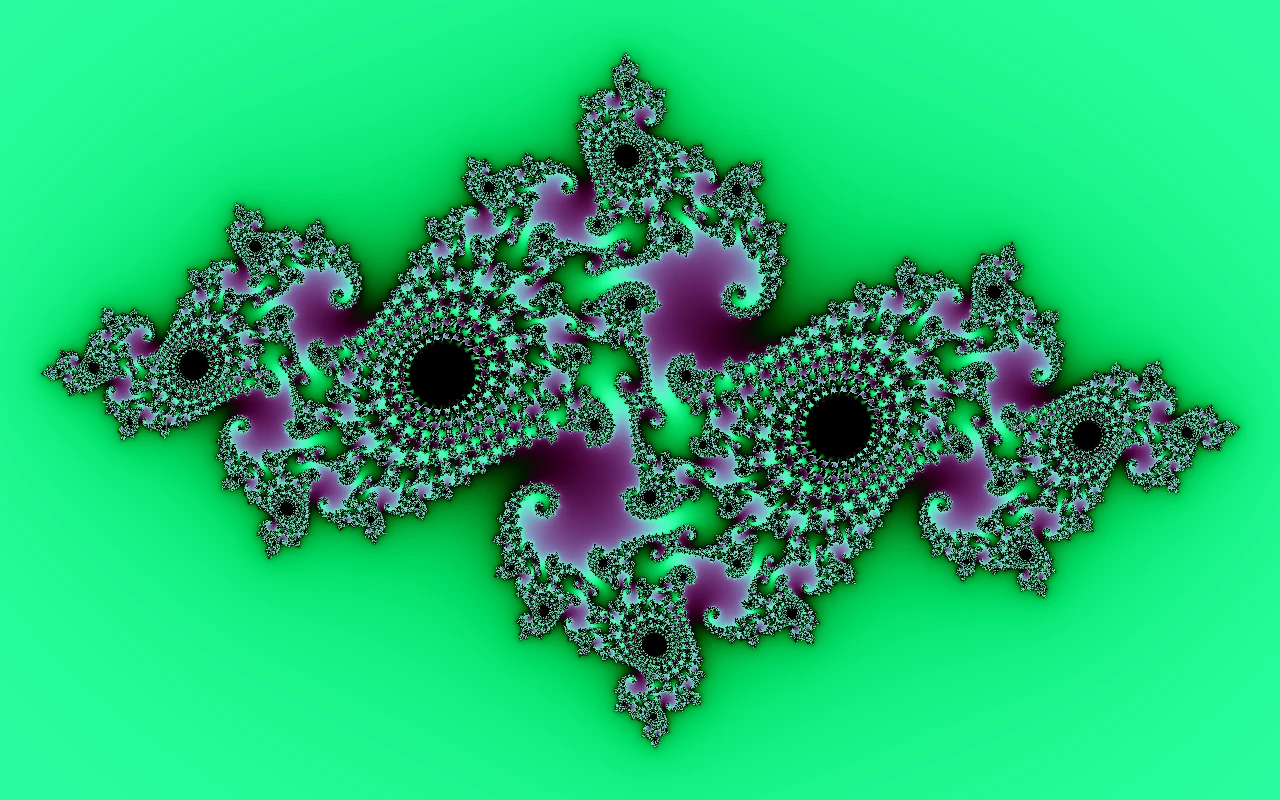 A Seahorse-Valley Julia setThe Julia set for a c drawn from Seahorse Valley — the whole set echoes the neighbourhood its seed came from.
Julia, c ≈ −0.743643887 + 0.1318259042i · span 3.2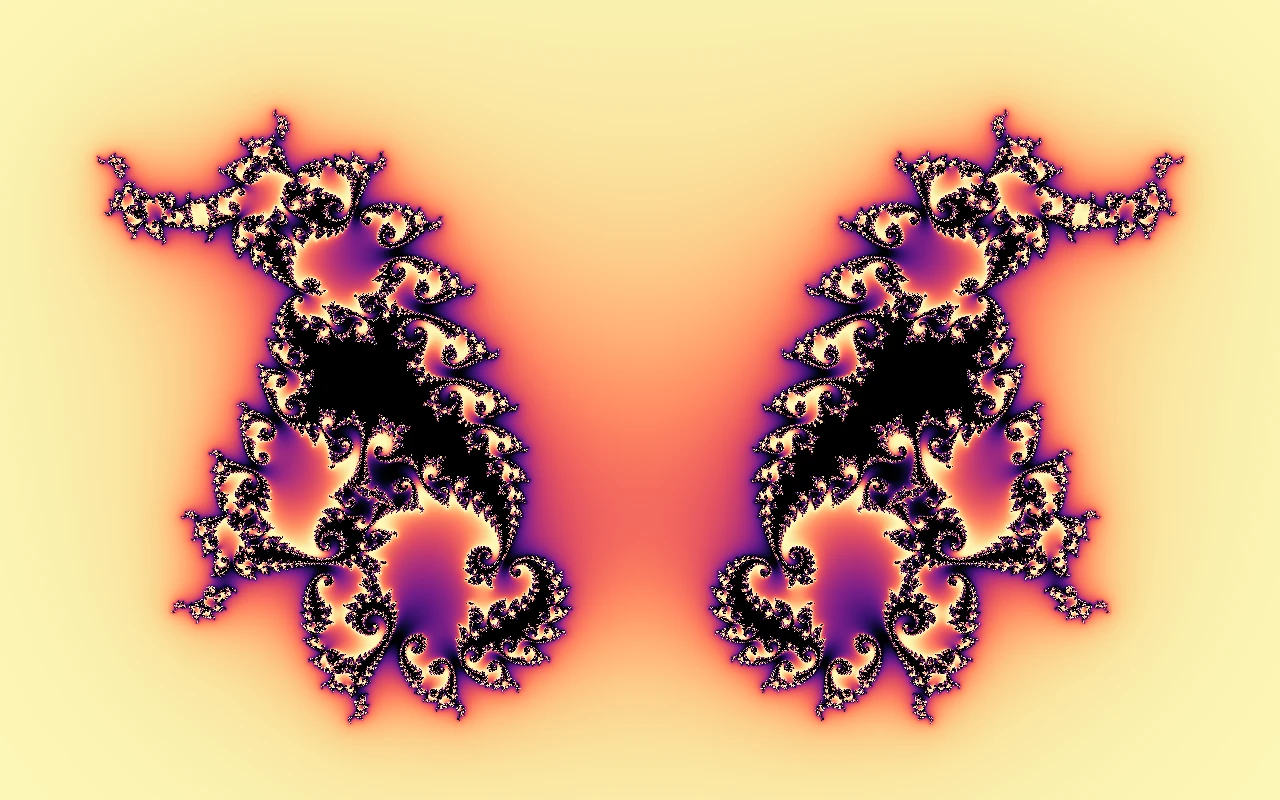 The PhoenixUshiki’s classic Phoenix attractor — the previous iterate feeds back in, and wings unfold.
Phoenix preset: c = 0.5667, p = −0.5 · z-plane span 3.0KEEP THIS BESIDE THE EXPLORER
Every chapter contains live-linked specimens. Read until an idea becomes interesting, open its figure in Mandala, and try to make the mathematics fail. That back-and-forth is the intended way through the guide.