
The eight families
Everything in the previous chapters came from one rule, . Change the rule and you get a different universe with the same physics: iterate, watch the orbit, colour by its fate. Mandala ships eight families — six that colour by escape, and two that colour by convergence. Equations first; each figure opens the real thing.
The escape-time six
| Family | Rule |
|---|---|
| Mandelbrot | |
| Multibrot | |
| Tricorn | |
| Burning Ship | |
| Celtic | |
| Phoenix |
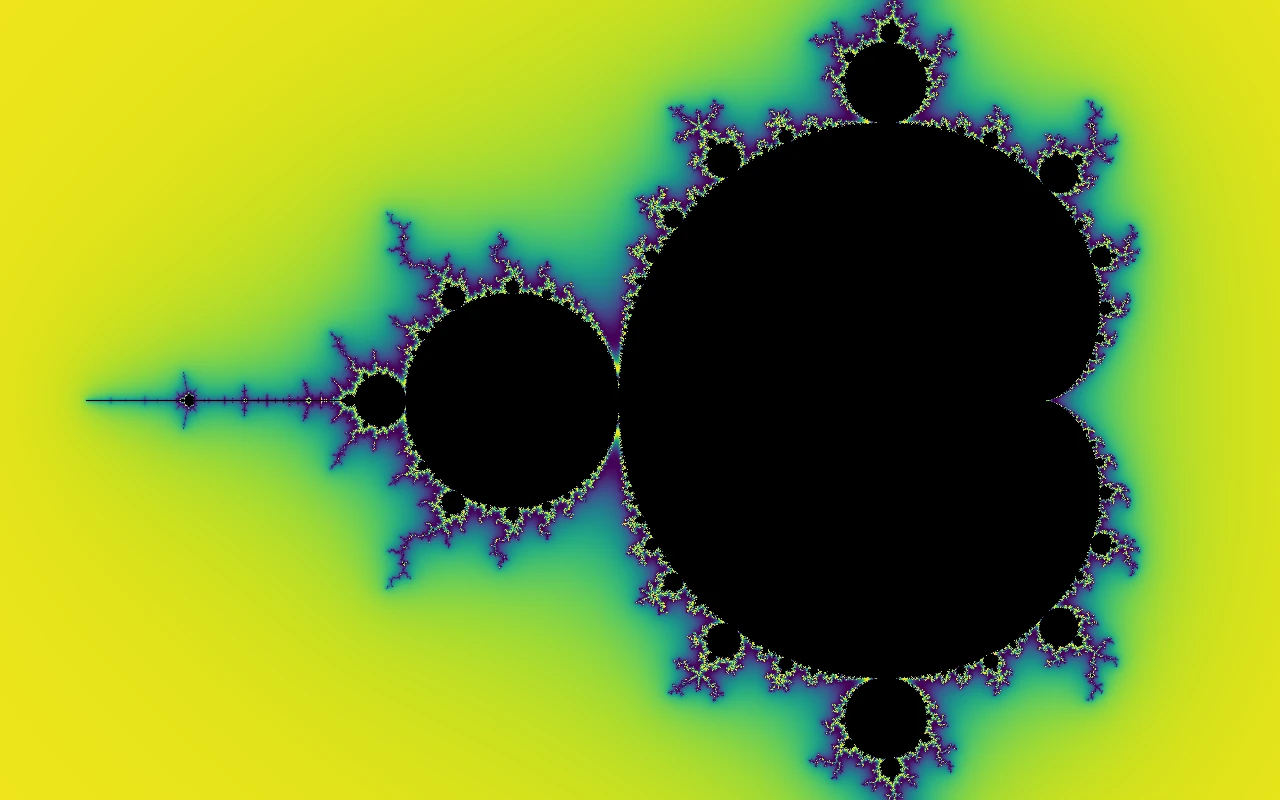
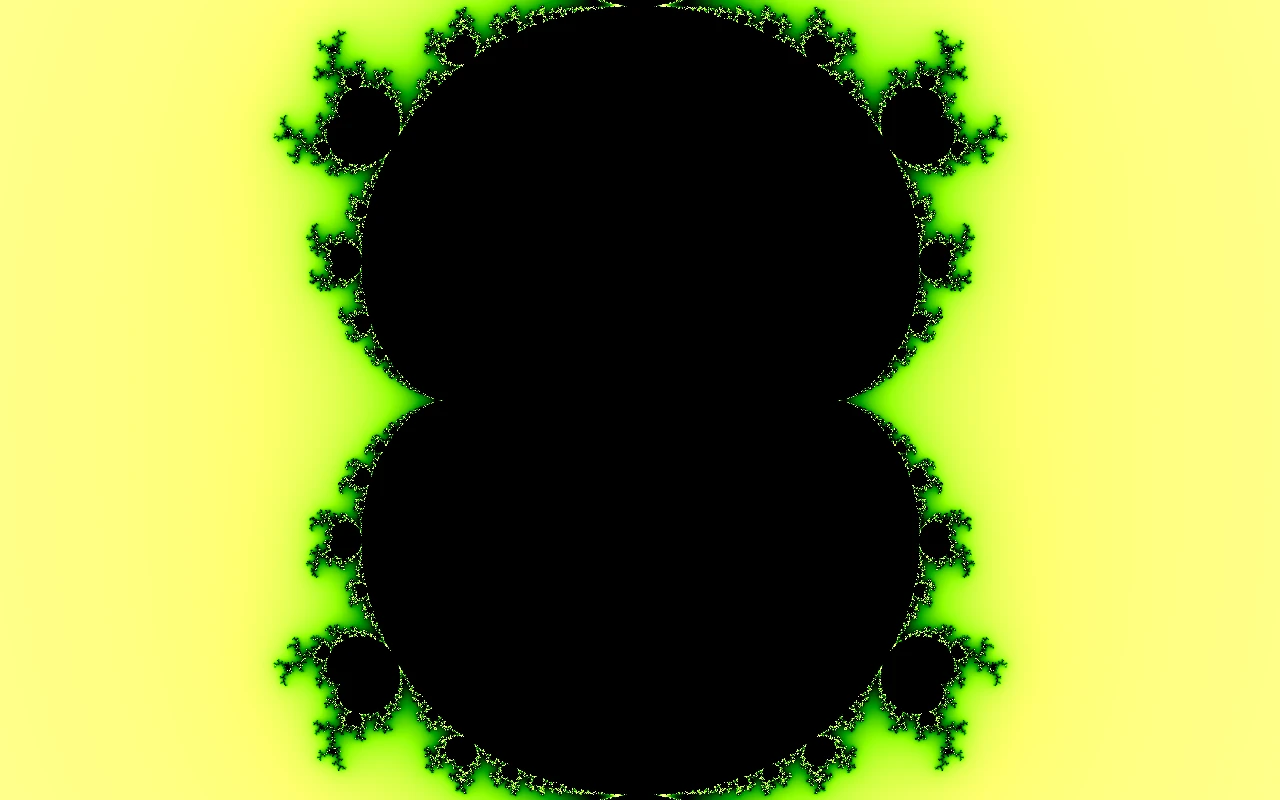
Mandelbrot is the original. Multibrot raises the power to : the body grows a second cusp and the bulbs arrange themselves with two-fold symmetry — in general, degree gives symmetry axes, because the critical points and the map's rotational structure repeat that many times around the origin.
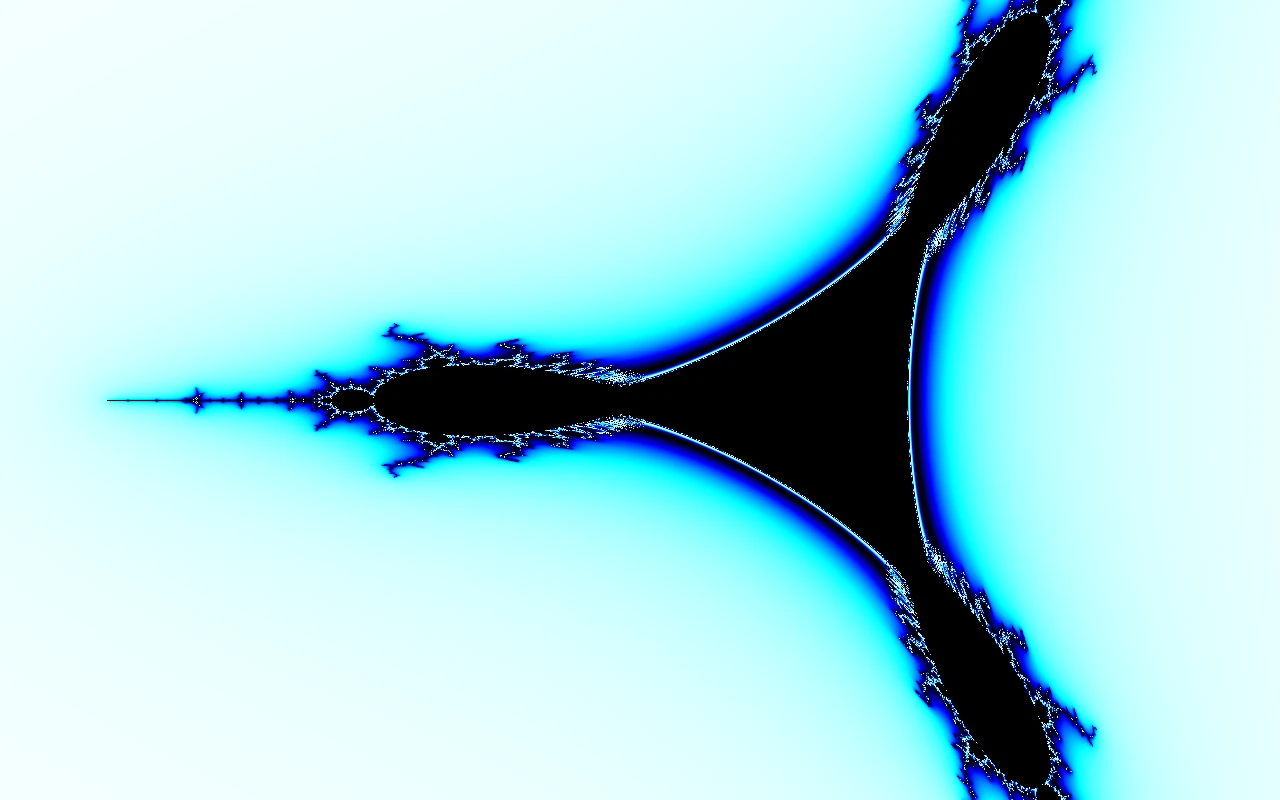
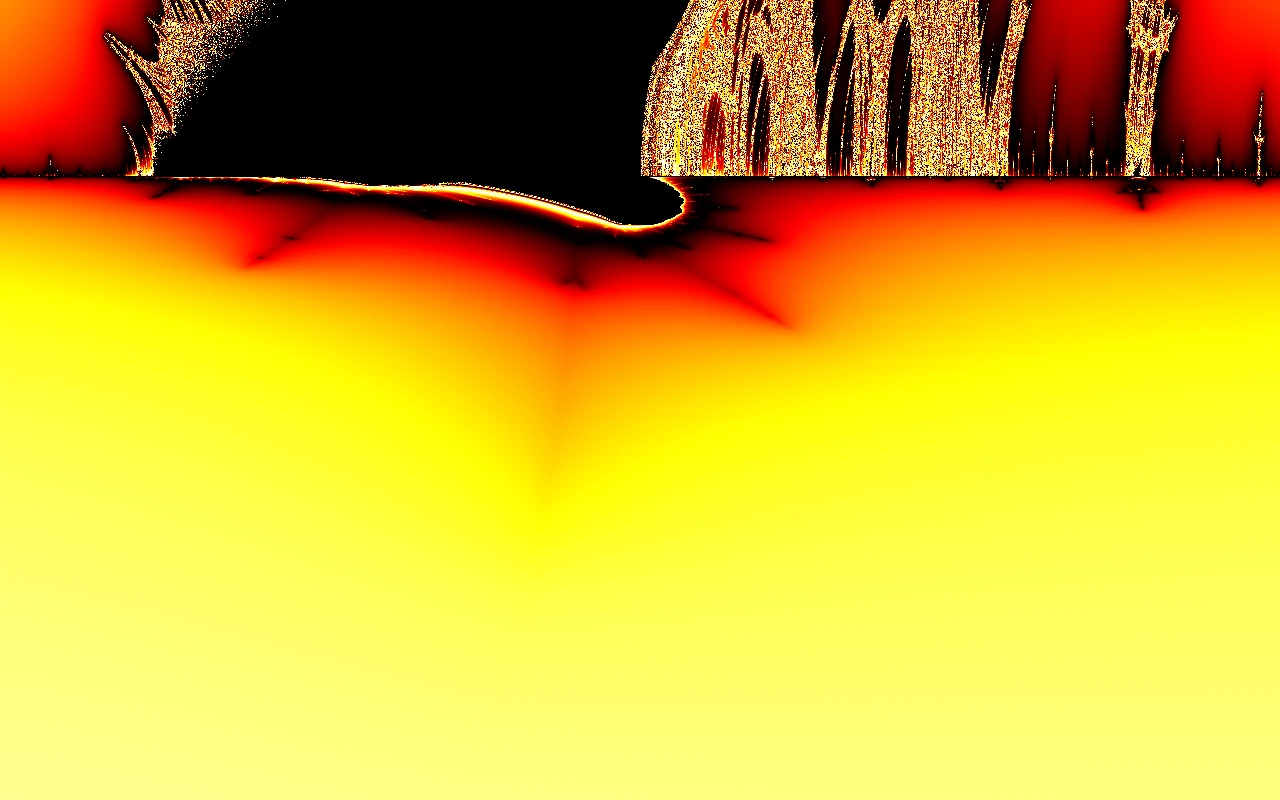
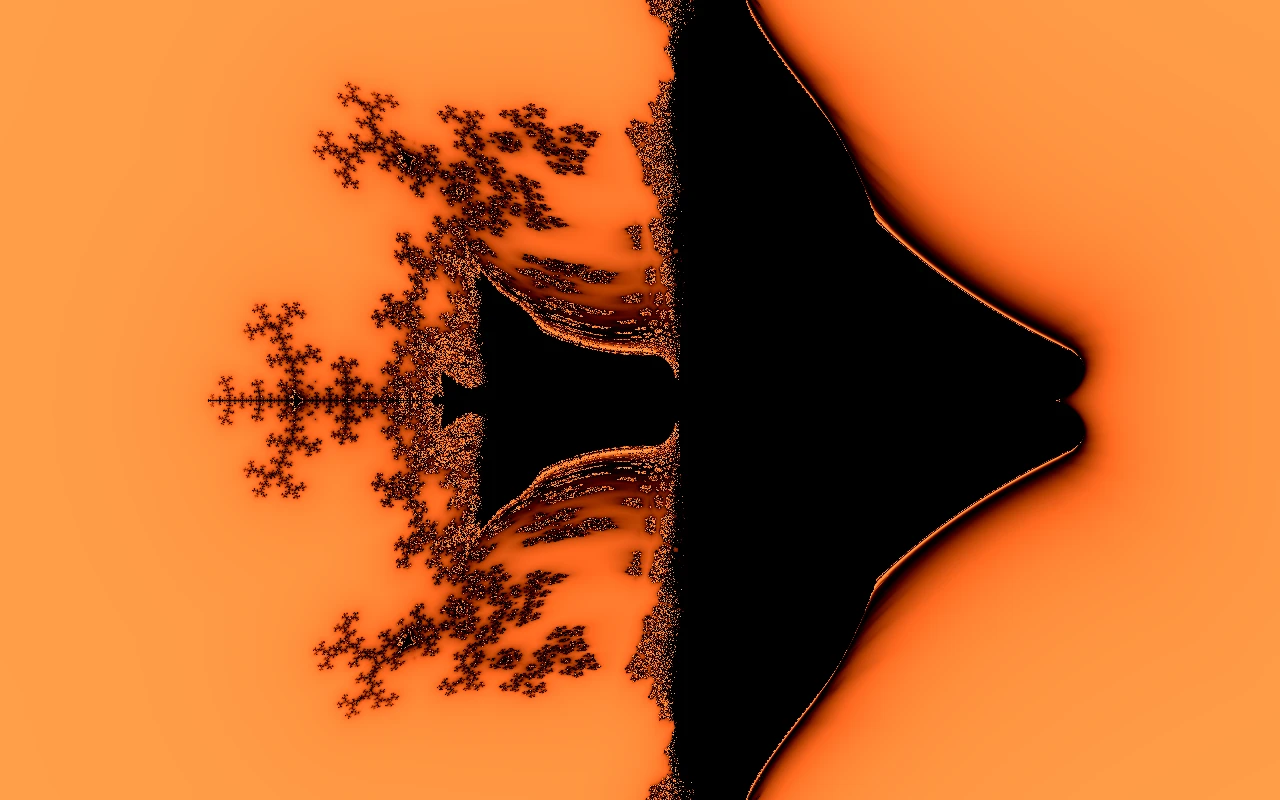
Tricorn conjugates before squaring — flips the imaginary part each step — and the set turns three-cornered. Burning Ship takes absolute values of both coordinates first; that fold in the plane breaks the symmetry of smooth curls and turns them into masts, hulls and flame. It is most dramatic just west of the main body, where a whole armada of smaller ships sails.
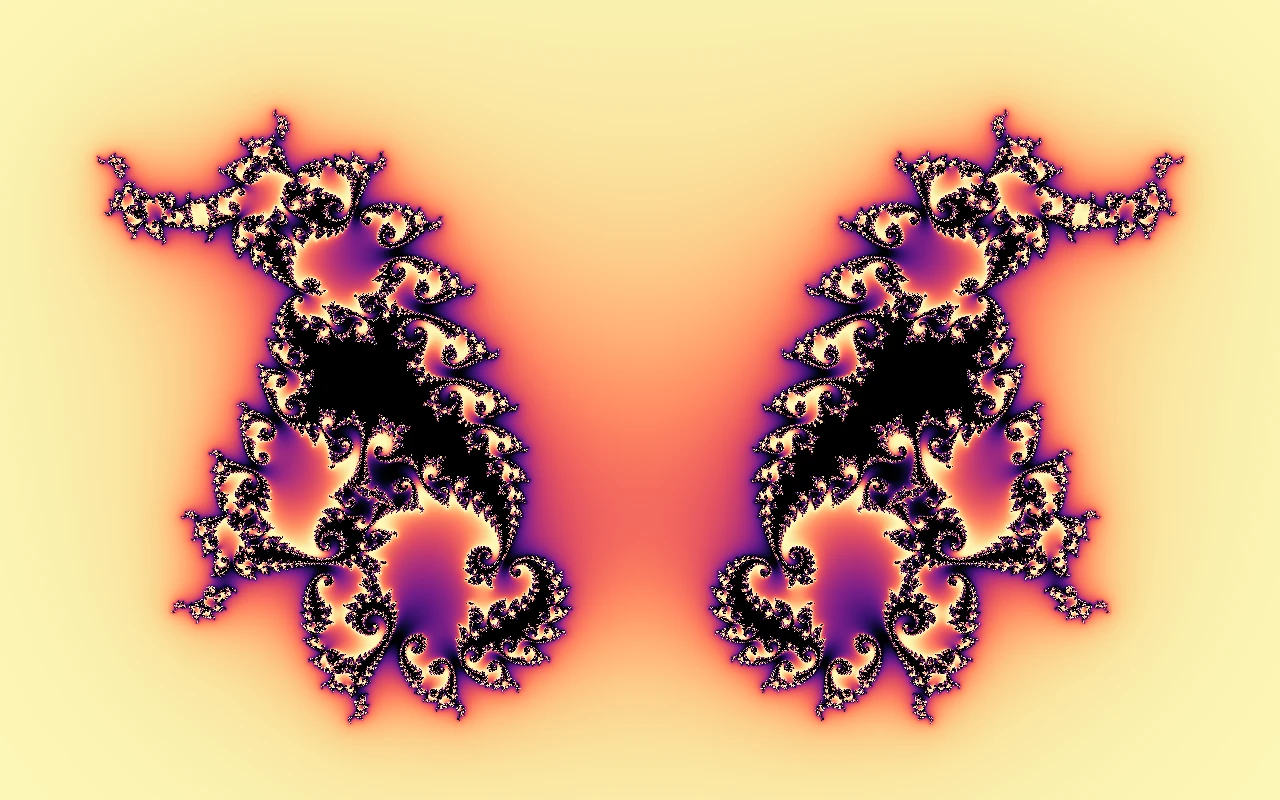
Celtic folds only the real part of , which weaves knotwork along the axis. Phoenix is the strangest of the six: the previous iterate feeds back in with weight , giving orbits a one-step memory — the state of the system is really the pair . Its classic form — Ushiki's Phoenix, with — is viewed in the dynamical plane and spreads wings.
Analytic and non-analytic — a distinction that matters
Mandelbrot and Multibrot are analytic (holomorphic): their rules are polynomials in , differentiable in the complex sense. Tricorn, Burning Ship and Celtic are not — and are folds, not complex-differentiable operations (Phoenix adds the memory term on top). Visually the folds are the point: they create the creases and flames. But the distinction also has hard consequences for the machinery — an analytic map has a well-defined complex derivative to iterate, which powers the shading of the shading chapter and the iteration-skipping tricks of the deep-zoom chapter; the non-analytic families need per-family care to reach the same depths.
The root-finders
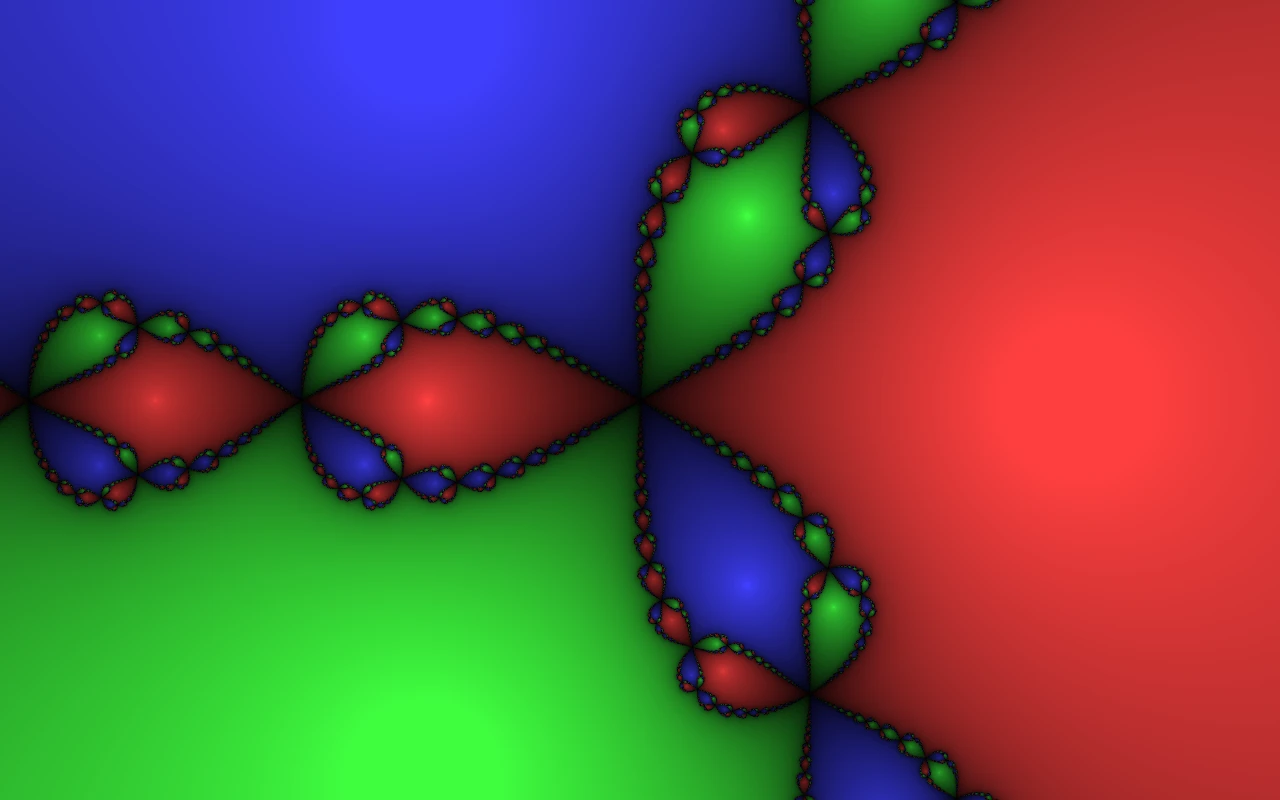
Newton colours a different question entirely. Apply Newton's root-finding method to :
and ask which of the three cube roots of unity each starting point falls into. There is no escape to infinity, and almost every point converges to one of the three roots — but not all of them do: a measure-zero set, the basin boundary (the Newton map's Julia set), never settles. Those basins meet along that boundary so contested that between any two colours the third always intrudes, and the points that never converge are painted black.
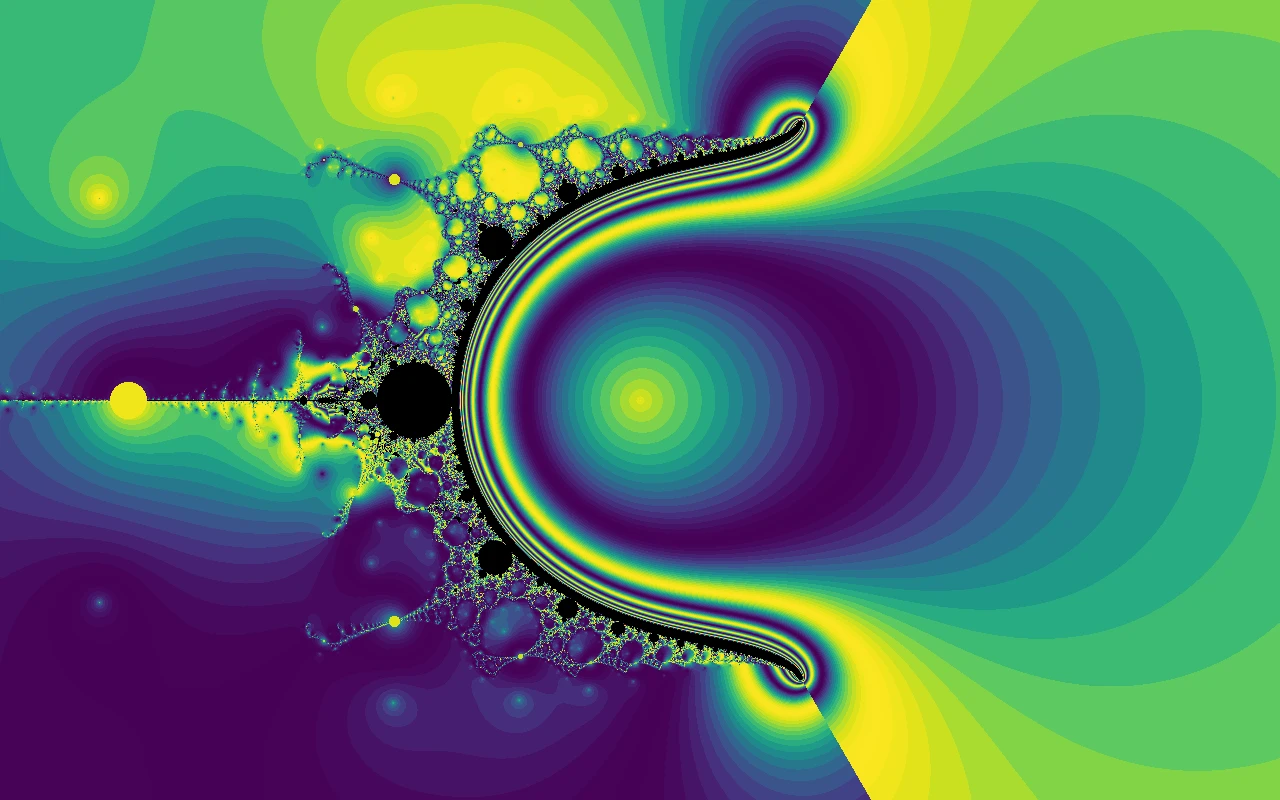
Nova perturbs that method with a relaxation factor and an added constant:
and something remarkable happens: minibrot-like bodies — Mandelbrot's silhouette again — condense over the convergence basins. The same shape haunts entirely different mathematics; that universality is one of the deep facts of the field.
Every escape-time family has both planes (the Julia chapter) — a Burning Ship Julia set is one gesture away — and all six deep-zoom on the full precision ladder (the deep-zoom chapter). The two root-finders are the honest exception: they cap at the double-double tier, around — still a trillionfold past where ordinary arithmetic gives up.